

Blackjack Basics for UK Players
Blackjack offers the lowest house edge—if you know what you’re doing. That conditional matters enormously. Played poorly, blackjack’s mathematical advantage over other casino games disappears. Played well, it becomes one of the most rewarding gambling options available to UK players. The difference lies entirely in understanding the fundamentals.
The objective is simple: beat the dealer by getting a hand value closer to 21 without exceeding it. Number cards count at face value. Face cards—kings, queens, jacks—count as 10. Aces count as either 1 or 11, whichever benefits your hand. A hand totalling more than 21 is a “bust,” an automatic loss regardless of what the dealer holds.
Play begins with two cards dealt to you and two to the dealer, one face up and one face down. Based on your hand and the dealer’s visible card, you decide whether to hit (take another card), stand (keep your current hand), double down (double your bet and take exactly one more card), or split (if you hold a pair, separate them into two hands). These decisions determine whether you win, lose, or push.
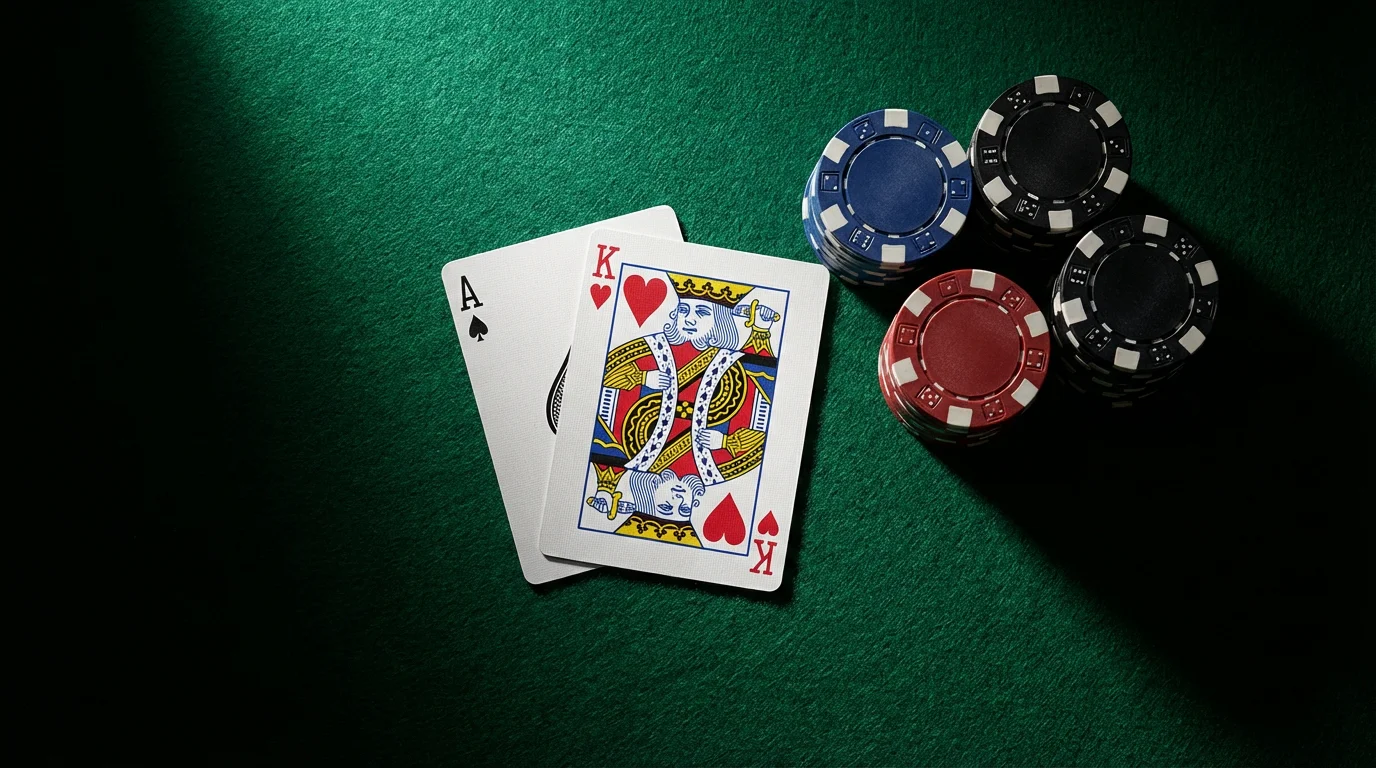
A natural blackjack—an ace plus a ten-value card on your initial two cards—pays 3:2 at most UK tables, meaning a £10 bet returns £25. Some tables have reduced this payout to 6:5, which significantly increases the house edge; avoid these games when possible. If both you and the dealer hold blackjack, the hand pushes and your bet returns.
The dealer follows fixed rules rather than making decisions. Typically, the dealer must hit on 16 or below and stand on 17 or above. Whether the dealer hits or stands on “soft 17” (an ace counted as 11 plus a 6) varies between tables and affects strategy. The dealer’s predictability is what makes blackjack mathematically beatable—their constraints create exploitable patterns.
UK online casinos offer blackjack in both RNG and live dealer formats. RNG games deal hands instantly using random number generators, allowing fast play with low minimum stakes. Live dealer blackjack streams real tables with physical cards, offering authentic experience at slightly slower pace and higher minimums. Both formats use the same fundamental rules, though specific details vary between variants.
Blackjack Variants at UK Casinos
Each blackjack variant has different rules—and different odds. The core gameplay remains consistent, but details like deck count, doubling restrictions, surrender options, and dealer hitting rules shift the house edge meaningfully. Understanding these variations helps you choose games that offer better value.
Classic Blackjack, sometimes called American Blackjack, typically uses 6-8 decks, allows doubling on any two cards, permits splitting up to three times, and has the dealer peek for blackjack (checking immediately if their face-up card is an ace or ten). This peek rule slightly benefits players by ending hands early when the dealer has blackjack, preventing additional bets on splits and doubles that would otherwise lose.
European Blackjack often uses just two decks, which marginally favours players, but compensates by restricting doubling to hands totalling 9, 10, or 11. The dealer typically doesn’t peek for blackjack, meaning you can lose double and split bets to a dealer natural. This “no peek” rule increases the house edge enough that European Blackjack isn’t automatically better despite fewer decks.
Atlantic City Blackjack represents a player-friendly variant: eight decks, dealer stands on soft 17, late surrender allowed, and splitting up to three times. The late surrender option—forfeiting half your bet after seeing the dealer’s up card—provides strategic value in specific situations. This variant offers one of the lowest house edges available at around 0.35% with optimal play.
Spanish 21 removes all 10s from the deck (keeping face cards), dramatically altering the maths. Compensating rules include player 21 always winning and liberal doubling options, but the unusual setup requires learning a different basic strategy entirely.
Blackjack Switch deals two hands and allows swapping the second card between them. Dealer 22 pushes instead of busting, and blackjack pays even money—changes that nearly offset the switching advantage.
Side bets appear across most variants: Perfect Pairs (betting your first two cards are a pair), 21+3 (poker-style combinations using your cards and dealer’s up card), and insurance (betting the dealer has blackjack when showing an ace). Side bets carry substantially higher house edges than the main game and should generally be avoided by anyone prioritising optimal play over entertainment variety.
Basic Blackjack Strategy
Basic strategy isn’t optional—it’s the minimum for playing blackjack properly. Every hand situation has a mathematically correct decision based on your cards and the dealer’s up card. Deviating from basic strategy hands the casino extra edge for no reason. The good news: basic strategy can be learned and referenced during play, requiring memorisation only for those who want the fastest possible sessions.
The strategy exists because the dealer plays predictably. Since you know the dealer must hit until reaching 17+ and must stand thereafter, probability calculations determine which player actions maximise expected return in each situation. Decades of computational analysis have produced charts showing exactly when to hit, stand, double, split, or surrender.
For hard hands (no ace or ace counted as 1), the general principles are straightforward. Always stand on 17 or higher. Always hit on 8 or lower. For hands totalling 9-11, consider doubling when the dealer shows weakness (low up cards). Hands of 12-16 are the tricky decisions: you’ll sometimes stand against weak dealer cards and sometimes hit against strong ones. A strategy chart provides exact thresholds.
Soft hands (containing an ace counted as 11) play differently because you can’t bust with one hit. Soft 17 and below should always hit; you’re improving or staying flexible. Soft 18 is the inflection point—stand against weak dealer cards, hit against strong ones. Soft 19 and 20 stand always. The flexibility of soft hands means more aggressive plays like doubling become correct in situations where hard hands would simply hit.
Pair splitting follows specific rules. Always split aces and eights. Never split tens or fives. Other pairs depend on the dealer’s up card—the chart shows exactly when. The rationale: splitting aces gives you two chances at blackjack, splitting eights converts a problematic 16 into two decent starting hands, while splitting tens breaks up an already strong hand for no benefit.
Surrender, when available, should be used sparingly but correctly. Surrender 16 against dealer 9, 10, or ace. Surrender 15 against dealer 10. These hands lose often enough that sacrificing half the bet immediately produces better long-term results than playing them out.
Using basic strategy correctly reduces the house edge to around 0.5%, varying slightly by specific game rules. That’s compared to 2-3% for players making decisions by instinct. Over thousands of hands, this difference compounds significantly. Strategy cards are permitted at most online casinos and even some live dealer tables—no excuse exists for not using one until you’ve internalised the decisions.
Common mistakes include standing on soft 17 (you should hit), hitting 12 against dealer 4-6 (you should stand), and never doubling soft hands (you should double quite often). Each error seems small but costs real money over time. Learning proper play isn’t difficult; applying it consistently is where live tables offer advantages.
Live Dealer Blackjack UK
Live blackjack adds authenticity—and sometimes better rules. Watching real cards dealt by professional dealers provides an experience RNG games can’t match. For players who distrust computerised shuffling or simply prefer human interaction, live dealer blackjack has become the default format.
Table selection matters more in live blackjack than RNG games. Limits vary enormously—from £5 minimums at standard tables to £10,000+ at VIP rooms. Rule variations exist between tables even from the same provider. Check whether the dealer hits or stands on soft 17, whether surrender is offered, and how many decks are in play before sitting down. These details affect your expected results.
Seat availability can be an issue at busy times. Standard live blackjack tables accommodate seven seated players, and popular tables during evening hours often run full. “Bet behind” functionality lets unlimited additional players wager on seated players’ hands, but you lose control over playing decisions—a frustrating compromise for strategy-minded players. Infinite Blackjack solves this with unlimited seats sharing common dealer cards, though the format sacrifices some authenticity.
Pace is noticeably slower than RNG blackjack. Physical dealing, shuffling, and player decision times across multiple seats mean fewer hands per hour. This actually benefits bankroll management—slower play means lower theoretical hourly loss even at identical stakes. Treat the reduced pace as a feature rather than a limitation.
VIP tables offer elevated limits for high-stakes players but rarely change the fundamental rules. Some VIP tables provide marginally better conditions—fewer decks, more favourable soft 17 rules—but the primary appeal is exclusivity and higher betting ceilings. If you’re playing VIP stakes, verify the specific rules justify the higher minimums.
Evolution Gaming dominates live blackjack provision, with Pragmatic Play and Playtech as alternatives. Quality is consistently high across major providers; meaningful differences emerge in interface design and table availability rather than game fairness. Most UK casinos offer live blackjack through Evolution; checking availability before registering is worthwhile only if you have specific variant preferences.
Blackjack Bankroll Management
Your bankroll strategy matters as much as your playing strategy. Even with perfect basic strategy, short-term variance can devastate underfunded sessions. Managing your money protects you from normal statistical fluctuation and ensures you survive long enough for skill to manifest in results.
Session sizing should match your total bankroll and risk tolerance. A common guideline suggests bringing 20-30 betting units per session—if you’re betting £10 per hand, a £200-300 session bankroll provides reasonable cushion against losing streaks. Smaller session stakes risk exhausting your funds before variance balances out; larger stakes risk emotional tilting when losses mount.
Define your stop-loss before playing and honour it absolutely. Decide how much you’re prepared to lose in a session and stop when you reach that point. Chasing losses by increasing bets or extending sessions transforms controlled gambling into the kind of behaviour that causes real harm. The house edge ensures long-term negative expectation; no amount of willpower changes mathematics.
Win goals are more controversial. Some players lock in profits by stopping after reaching a target; others argue mathematically there’s no difference between continuing and starting anew. The practical case for win goals is psychological: leaving preserves gains that might otherwise erode.
Progressive betting systems—Martingale, Fibonacci, and similar—don’t work despite their intuitive appeal. These systems increase variance, creating opportunities for both larger wins and catastrophic losses. The losses eventually prevail.
Flat betting—wagering the same amount on each hand regardless of previous results—remains the most sensible approach. It produces the smoothest variance, extending playtime and keeping emotional pressure low. Occasional deviations for bankroll-appropriate doubles and splits are fine; systematic stake variation based on wins and losses is not.
Treat blackjack as entertainment with a cost rather than an income source. The edge, even optimally played, favours the house. Budget accordingly, protect that budget through disciplined session management, and accept that losing sessions are normal outcomes rather than failures requiring correction.
Becoming a Better Blackjack Player
Improvement is possible—and blackjack rewards the effort. Unlike slots or roulette where no amount of skill changes expected outcomes, blackjack players who invest in learning can measurably reduce the house advantage. The gap between casual play and optimal play is worth bridging.
Start by internalising basic strategy for your most-played variant. Strategy trainers exist online that deal hands and flag incorrect decisions, drilling the correct plays until they become automatic. Most people can achieve near-perfect basic strategy with a few hours of practice spread across several sessions. The payoff in reduced house edge justifies the time investment many times over.
Once basic strategy is second nature, explore rule variations more deliberately. Seek out games with favourable conditions: 3:2 blackjack payouts rather than 6:5, dealer stands on soft 17, surrender available, fewer decks. Each improvement shaves points off the house edge. Combined, these choices can transform a 0.5% house edge into 0.3% or better.
Card counting—tracking the ratio of high to low cards remaining in the shoe—can theoretically give players an edge over the house. In practice, it’s nearly impossible online. RNG games shuffle after every hand, eliminating any count. Live dealer games use continuous shuffling machines or cut off significant portions of the shoe, reducing count effectiveness drastically. Card counting remains viable at some land-based casinos but offers little benefit in the UK online context.
Focus instead on game selection and discipline. The players who actually profit from blackjack over time combine near-perfect strategy execution with rigorous game selection, strict bankroll management, and bonus exploitation where terms favour them. They treat blackjack as a skill game within a framework of mathematical disadvantage, optimising what they control.
Keep perspective on what’s achievable. Even optimal play leaves the house with an edge. Blackjack isn’t a path to riches; it’s a gambling game that rewards knowledge more than most alternatives. Learning to play well makes the experience more engaging and reduces its cost. That’s the realistic goal—not beating the casino, but playing well enough that the entertainment’s price feels fair.
Find more game guides at onlinegamblingsitesuk. Also read our online roulette guide.