

The UK Gambling Landscape: What Sets British Sites Apart
Britain didn't just regulate online gambling—it rewrote the rules for how the industry should treat players. While other jurisdictions debated whether to permit remote gambling at all, the United Kingdom established a licensing framework that became the global benchmark for consumer protection and operator accountability.
The Gambling Commission, operating under the Gambling Act 2005 with expanded powers following successive updates, oversees every aspect of legal gambling within the UK. Operators seeking a remote gambling licence must demonstrate financial stability, prove their games are fair, implement robust anti-money laundering protocols, and commit to player protection measures that go far beyond most other markets.
What makes UK-licensed sites genuinely different comes down to three pillars. First, accountability: every licensed operator answers to a regulator with real enforcement powers, including the authority to revoke licences and impose unlimited fines. Second, transparency: game fairness must be independently verified, return-to-player percentages published, and terms written in plain language. Third, player protection: deposit limits, session reminders, self-exclusion tools, and affordability checks aren't optional—they're legal requirements.
Point of Consumption Tax
Since December 2014, the UK has levied tax on gambling operators based on where the customer is located rather than where the operator is based. Regardless of whether a company is headquartered in Gibraltar or Malta, any revenue generated from UK players is subject to remote gaming duty (currently 21% since April 2019, rising to 40% from April 2026). This ensures all operators competing for UK players fall under UKGC oversight.
When you deposit funds with a UKGC-licensed operator, your money is protected under strict segregation rules. Customer funds must be held separately from operational funds, with the level of protection clearly disclosed. Should an operator fail financially, these protections determine whether you'll see your balance returned.
The distinction between UK-licensed operators and offshore alternatives has never been sharper. Sites licensed in jurisdictions like Curacao might offer flashier bonuses or fewer restrictions, but they operate outside the UK's protective framework. That means no recourse through the Gambling Commission's complaints process, no guaranteed access to GamStop self-exclusion, and no requirement to implement player protection measures. The headline bonus might look better, but the safety net underneath is considerably thinner.
How We Evaluate UK Gambling Sites
Every site on this page passed a 47-point audit before we considered recommending it. That isn't marketing speak—it reflects a systematic evaluation process designed to separate genuinely good operators from those that simply look the part.
Licensing verification comes first, and it's non-negotiable. We check the Gambling Commission's public register to confirm each operator holds a valid remote gambling licence, noting any regulatory actions on record. An operator with a licence under review or a history of compliance failures doesn't make the cut.
Bonus fairness receives particular scrutiny. We examine wagering requirements against regulatory caps, assess game contribution rates, identify excluded games, and calculate the realistic expected value of each offer. A site advertising a generous welcome bonus with impossible playthrough conditions gets marked down severely.
Payout speed testing involves real-money withdrawals across multiple payment methods. We document the time between withdrawal request and funds appearing in our accounts, noting any pending periods or unexplained holds. Operators that consistently process withdrawals quickly score highly; those that seem to find reasons to delay payouts do not.
Game variety assessment looks beyond raw numbers. Having 3,000 slot titles means little if they're all from second-tier providers with questionable RTP verification. We evaluate provider partnerships, game fairness certifications, RTP transparency, and the presence of genuinely popular titles. Live casino quality and table game selection factor into overall scoring.
Mobile experience testing covers both dedicated apps and mobile browser functionality. Given that most UK gambling activity now occurs on mobile devices, an operator treating mobile as an afterthought isn't providing acceptable service. Customer support responsiveness rounds out our evaluation—we contact support teams with realistic queries, documenting response times and quality of assistance provided.
Plan before you play
Session budget planner
Set what you can afford to lose and how you want to split it, and this works out a per-session limit — plus flags anything that looks set too high.
How this works: your monthly budget is split evenly across your planned sessions to get a per-session limit. If your stop-loss for a session is left blank or set higher than that limit, this treats the calculated limit as your actual cap. This is a planning aid, not account-level protection — most UK-licensed sites let you set real deposit and loss limits directly in your account settings, which are enforced automatically.
For information only. 18+. If gambling stops being fun, free confidential support is available from BeGambleAware and the National Gambling Helpline (0808 8020 133). Self-exclude from all UK-licensed sites via GAMSTOP.
Top-Rated UK Gambling Sites for 2026
These aren't household names by accident—they've earned their reputation through years of reliable service. The operators below consistently perform well across our evaluation criteria, though each excels in different areas.
bet365
The dominant force in UK sports betting, bet365 combines extraordinary market depth with competitive odds and live streaming covering tens of thousands of events annually. Their casino offering has expanded substantially, though it remains secondary to the sportsbook. Cash out works smoothly, mobile apps are stable, and support is available around the clock. For pure casino players, specialists offer deeper game catalogues, but as an all-round gambling destination, few competitors match their consistency.
Betway
Betway has built its reputation on doing the fundamentals exceptionally well. The sportsbook covers major markets with competitive odds, while the casino features games from leading providers including Evolution for live dealer content. Withdrawals process quickly, the mobile experience is polished, and their bonus structure tends toward reasonable wagering requirements. The esports betting section deserves particular mention—Betway offers markets that some competitors neglect entirely.
888casino
One of the longest-established online gambling brands, 888 has maintained relevance by continuously updating their platform while preserving reliability. Their proprietary casino games sit alongside titles from external providers, creating a distinctive catalogue. The no-deposit bonus lets you test the platform before committing funds. Live casino quality is high, poker integrates seamlessly, and the operator's experience shows in details like customer service quality and withdrawal efficiency.
William Hill
The heritage brand of UK gambling, William Hill's transition from high street bookmaker to online operator happened more successfully than predicted. The sportsbook benefits from decades of odds-setting expertise, particularly in horse racing. The casino offering is comprehensive without being overwhelming, featuring curated selections rather than endless scrolling. Recent ownership changes brought technology investment without disrupting what already worked.
Paddy Power
Nobody else quite matches Paddy Power's personality. The Irish operator combines serious betting functionality with marketing that doesn't take itself too seriously. Beneath the playful exterior sits a sportsbook with competitive odds and extensive in-play markets. The Betfair exchange integration adds betting exchange functionality for those who want it. Casino content focuses on popular titles rather than overwhelming volume.
Grosvenor
The UK's largest land-based casino operator brings physical casino credibility to its online platform. Grosvenor's live casino stands out because dealers often work in actual Grosvenor premises rather than generic studios. The MyGrosvenor rewards programme bridges online and offline play. The sportsbook is functional rather than market-leading, but for players who value the casino experience above all else, Grosvenor offers something genuinely distinctive.
Each operator holds a valid UKGC licence, implements mandatory responsible gambling tools, and has demonstrated consistent performance over years. The best choice depends on whether you prioritise sports betting depth, casino game variety, or live dealer quality. None will disappoint on fundamentals—the differences lie in where each excels.

Casino Sites vs Betting Sites: Key Differences
The house edge on blackjack and the margin on football odds work on entirely different principles. Understanding this distinction shapes how you should manage your bankroll and what realistic expectations look like.
Casino games operate on fixed mathematical edges. European roulette has a 2.70% house advantage on every spin—this doesn't change based on which numbers hit or how much you wager. Slots function similarly, with each game assigned a return-to-player percentage representing theoretical long-term payback. A slot with 96% RTP returns, on average, £96 for every £100 wagered over millions of spins. These percentages are audited, published, and consistent.
Sports betting works differently because outcomes are determined by real-world events with genuine uncertainty. Bookmakers set odds based on their assessment of probabilities, building in a margin to ensure profitability. Unlike casino games where the maths are fixed, betting markets can contain inefficiencies. When odds don't accurately reflect true probabilities, opportunity for positive expected value exists—though finding these edges requires skill, information, and discipline.
The Core Distinction
Casino games offer entertainment with mathematically certain house advantages. Sports betting offers the theoretical possibility of skilled players gaining an edge, but most recreational bettors face similar long-term outcomes to casino players. Neither is inherently better—choose based on what you enjoy, not mistaken beliefs about which offers better odds.
Your gambling temperament should guide your choice. If you enjoy games of chance with instant outcomes, casino games deliver that efficiently. If you prefer applying knowledge about teams and form to influence outcomes, sports betting offers that engagement. Many players enjoy both, switching depending on mood and available events.
How Online Slots Work: RTP and Volatility
A 96% RTP doesn't mean you'll get £96 back from every £100—it means the maths favour the house by 4% over millions of spins. This distinction matters because it explains why short-term results can diverge wildly from long-term expectations.
Every modern online slot uses a random number generator to determine outcomes. This isn't a physical mechanism that can be predicted or manipulated—it's software that produces genuinely random results, verified by independent testing laboratories before games receive regulatory approval. When you press spin, the outcome is determined instantly; the animated reels are purely visual entertainment while you wait to learn what the RNG already decided.
Return to player, expressed as a percentage, represents the theoretical long-term payback. A slot with 96.5% RTP will return £96.50 of every £100 wagered over its lifetime—but that lifetime spans millions of spins across thousands of players. Your individual session might return 150% or 20% or anywhere in between. The RTP is a statistical average, not a promise about any specific session.
Expected Loss Calculation
Suppose you're playing a slot with 95% RTP, betting £1 per spin, and averaging 500 spins per hour.
Hourly wagered: 500 × £1 = £500
House edge: 100% − 95% = 5%
Expected hourly loss: £500 × 5% = £25
This doesn't mean you'll lose exactly £25 every hour—variance ensures real results vary significantly. But over many hours of play, your actual losses will trend toward this expected figure.
Volatility (sometimes called variance) describes how results distribute around that average. Low volatility slots pay out frequently in small amounts, creating steadier gameplay with fewer dramatic swings. High volatility slots concentrate payouts in less frequent but larger wins, meaning longer losing streaks punctuated by occasional significant hits. Neither volatility level changes the RTP—a 96% slot at high volatility and a 96% slot at low volatility both return the same amount long-term—but they feel completely different to play.
Finding RTP information isn't always straightforward. UKGC regulations require this information to be available, but operators aren't required to display it prominently. Look for information buttons within game interfaces, check the operator's help section, or search for specific game RTP data from provider websites. Generally, most modern video slots fall between 94% and 97%, with anything above 97% considered notably player-friendly.
Understanding Betting Odds and Margins
When a bookie offers 1.90 on both outcomes of a coin flip, they're not being generous—they're guaranteeing themselves 5%. Understanding how odds work, and how bookmakers build in their profit margin, is fundamental to making informed betting decisions.
UK betting sites typically display odds in either decimal or fractional format, with decimal becoming increasingly standard. Decimal odds show your total return per pound staked: odds of 2.00 mean a £10 bet returns £20 (your £10 stake plus £10 profit). Fractional odds, the traditional British format, show profit relative to stake: 3/1 means £3 profit for every £1 staked, or £40 total return on a £10 bet.
Implied Probability — The probability of an outcome suggested by the odds. Calculate it by dividing 1 by the decimal odds. Odds of 2.50 imply a probability of 1 ÷ 2.50 = 0.40, or 40%. When implied probabilities across all outcomes exceed 100%, the excess represents the bookmaker's margin.
The bookmaker margin, sometimes called the overround, is how betting companies guarantee profit regardless of results. Consider a football match where both teams are equally likely to win: true odds would be 2.00 on either side, with implied probabilities totalling exactly 100%. Instead, a bookmaker might offer 1.90 on both teams. Each price implies a 52.6% probability, totalling 105.2%—that extra 5.2% is the margin.
Different markets carry different margins. Popular football match betting might operate on margins of 3-5%, while obscure markets or complex bets often feature margins of 10% or more. In-play betting typically carries higher margins than pre-match odds, reflecting the bookmaker's need to manage risk on rapidly changing events.
Comparing odds across bookmakers matters because margins vary. One operator might offer 2.10 on a tennis player while another offers 1.95 on the same outcome. Over thousands of bets, consistently taking the best available price makes a meaningful difference to long-term results. Odds comparison tools exist specifically for this purpose, though serious bettors often maintain accounts with multiple operators to access the best prices for each bet they want to make.
UKGC Licensing: Why It Matters
A Curacao licence costs a fraction of a UKGC licence—and offers players a fraction of the protection. This isn't regulatory snobbery; it reflects genuine differences in oversight, accountability, and recourse.
The UK Gambling Commission issues remote gambling licences under the Gambling Act 2005, with requirements extending far beyond collecting a fee. Applicants must demonstrate financial stability, prove their games are fair through accredited testing, implement robust anti-money laundering procedures, and meet specific responsible gambling standards.
Once licensed, operators remain under continuous supervision. The Commission monitors compliance through audits, mystery shopping, and analysis of player complaints. When operators breach licence conditions, consequences range from regulatory warnings to licence revocation. The Commission has imposed multimillion-pound fines on major operators for compliance failures.
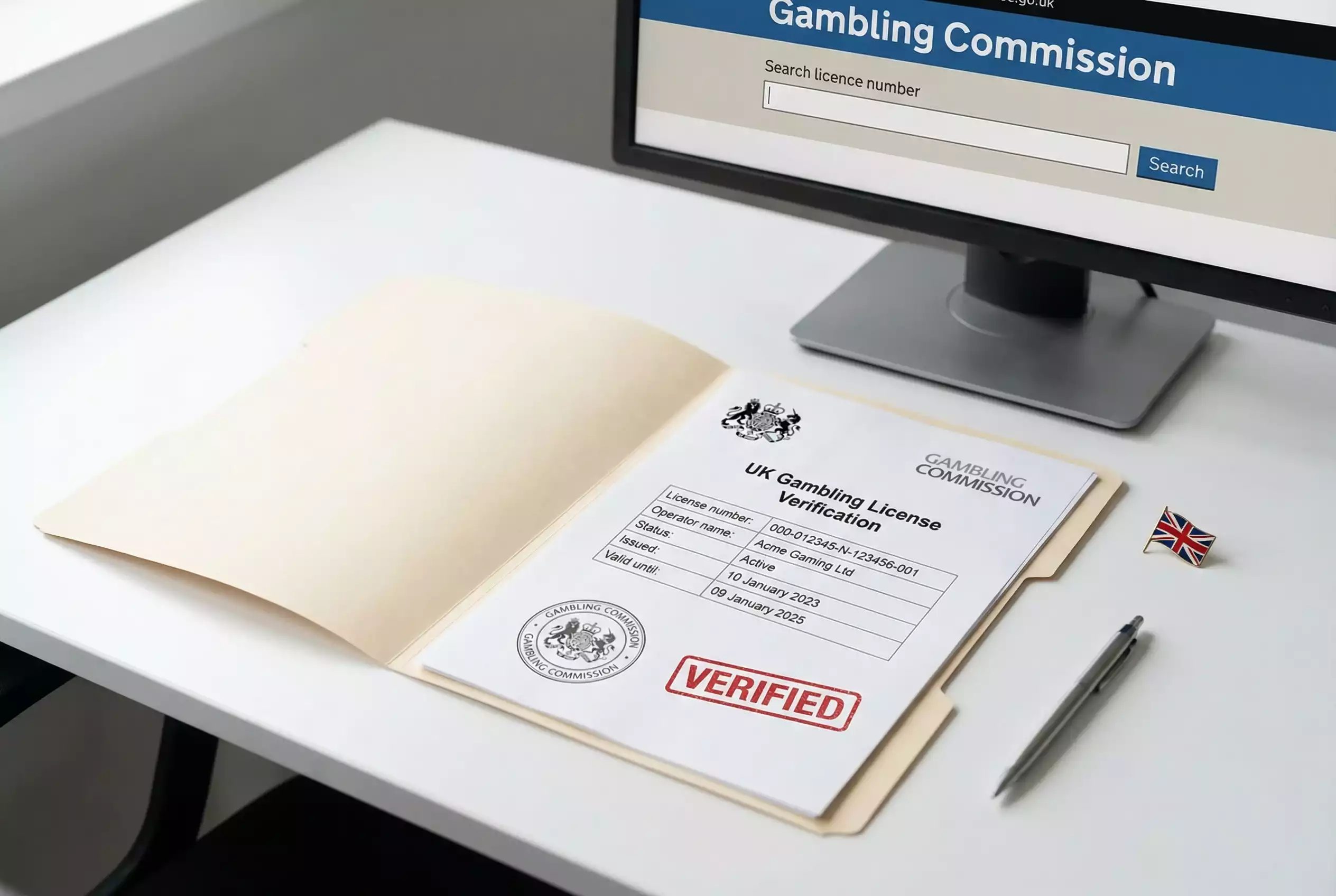
The public register at gamblingcommission.gov.uk lets you verify any operator's licensing status instantly. Search by company name to confirm they hold a valid licence and check for regulatory actions. If an operator isn't listed or shows a suspended licence, that's a definitive warning to look elsewhere.
Offshore jurisdictions like Curacao, which licenses thousands of gambling sites through a handful of master licence holders, offer minimal player protection. Complaints processes are effectively non-existent, and financial protections for player funds are often inadequate.
The practical difference emerges when something goes wrong. A dispute with a UKGC-licensed operator follows a structured process: internal complaints handling, independent alternative dispute resolution, with the Gambling Commission available for serious regulatory breaches. A dispute with an offshore operator typically leads nowhere—no regulator with enforcement powers, no ADR scheme, and no realistic prospect of recovering funds if an operator refuses to pay.
2026 UKGC Regulations: What Changed
The 2025 reforms didn't just tweak the rules—they fundamentally changed how UK gambling sites can operate. Following the government's white paper review and subsequent Gambling Commission implementation, the regulatory landscape has transformed substantially.
These changes emerged from years of consultation and growing evidence about gambling-related harm. The new rules represent a deliberate shift toward stricter consumer protection, even at the cost of operator revenues and player convenience.
Maximum Stake
£5 per spin (18-24: £2)
Affordability Trigger
£150 net loss in 30 days
Wagering Cap
Maximum 10x bonus
Bonus Rules
No mixed product bonuses
Stake limits on online slots—£5 maximum per spin for most players, reduced to £2 for those aged 18-24—primarily impact higher-spending players who previously wagered £50 or £100 per spin. These limits came into effect in April and May 2025. For recreational players who never approached those stakes, the limits change nothing about their experience.
Affordability checks represent the more controversial intervention. Operators must implement enhanced due diligence when customers reach spending thresholds, with £150 net loss over 30 days triggering initial checks. Critics argue these checks are intrusive; supporters counter that problem gamblers rarely self-identify until significant harm has occurred.
The wagering requirement cap at 10x bonus value changes welcome offer economics. Previously, some operators imposed requirements of 40x or higher, creating bonuses mathematically almost impossible to convert to withdrawable funds. Under new rules effective from January 2026, a £100 bonus can require no more than £1,000 in total wagering. This makes bonuses more realistic but also smaller.
Online Slot Stake Limits Explained
If you're under 25, your maximum stake per spin dropped from unlimited to £2—a 99% reduction for some players. The age-differentiated approach reflects evidence that younger players face higher risks of developing gambling problems.
For players aged 25 and over, the limit sits at £5 per spin. This applies specifically to online slots—table games, live casino, and sports betting aren't subject to the same restrictions. The logic behind targeting slots relates to their speed of play and association with gambling harm in regulatory research.
Implementation requires operators to verify customer ages before allowing higher stakes. Since most verification happens at registration, this is straightforward for existing customers. The system works seamlessly in most cases—operators simply don't offer stake options above the applicable limit.
For high-rolling slot players, these limits fundamentally change the game. Some have migrated to table games without stake limits, others have reduced overall gambling, and some have sought unlicensed offshore alternatives. The long-term impact on harm reduction remains subject to ongoing research.
Financial Vulnerability Checks
The £150 threshold means most regular players will encounter these checks—and opinions on whether that's appropriate remain divided. Affordability assessments represent the most contentious element of the regulatory overhaul.
The tiered system works as follows: when a customer's net losses reach £150 within 30 days, operators must conduct initial affordability assessments. These might involve open banking data, credit reference checks, or simply asking players to confirm they can afford their gambling. At £500 net loss, enhanced due diligence kicks in, potentially requiring documentation of income.
Open banking, where customers share read-only access to their financial accounts, provides detailed income and expenditure information. All this requires explicit customer consent—but refusing consent may result in restricted gambling limits.
The practical experience for most players involves occasional friction—a pop-up asking you to confirm affordability, a request to complete verification, or a temporary spending limit. For players whose gambling genuinely remains affordable, these are minor inconveniences. For players gambling beyond their means, the checks function as intended intervention points.
Gambling Bonuses: Types and Terms
A £100 bonus with 40x wagering is worth less than a £20 bonus with 10x wagering—and the maths proves it. Understanding how bonuses actually work is essential for extracting any genuine value from promotional offers.
Welcome bonuses for new customers typically take the form of matched deposits: deposit £50, receive £50 in bonus funds. Some operators offer no-deposit bonuses, providing free funds simply for registering, though these invariably come with significant restrictions. Free spins award a set number of slot spins at fixed stakes, with winnings usually converted to bonus funds subject to wagering requirements.
Sports betting bonuses work differently, commonly structured as free bets. Deposit and place a qualifying bet, receive a free bet of equivalent value if your qualifier loses. The free bet stake itself isn't returned with winnings—a £10 free bet winning at 2.00 returns £10 profit rather than £20 total.
Reload bonuses target existing customers, typically smaller than welcome bonuses but sometimes with better terms. Cashback offers return a percentage of losses, providing value only to players who lose. Loyalty programmes accumulate points based on activity, redeemable for bonuses or rewards.
Wagering requirements remain the critical factor. Under the current 10x regulatory cap, a £100 bonus requires £1,000 in total bets before withdrawal. Not all games contribute equally: slots typically count 100%, but table games might contribute only 10%. Maximum bet rules restrict individual bet sizes during wagering, often to £5. Time limits force completion within a set period, commonly 30 days.
Calculate the expected cost of meeting wagering requirements before accepting any bonus. Multiply total required wagering by the house edge of your chosen games. If that expected cost exceeds the bonus value, you're paying for the privilege of having the bonus.

Calculating Wagering Requirements
£50 bonus × 10x wagering = £500 total bets required before withdrawal. That's the basic formula, but working out whether a bonus holds value requires going further.
Scenario: £100 Matched Deposit Bonus with 10x Wagering
Wagering requirement: £100 × 10 = £1,000 total bets
Playing slots with 96% RTP (4% house edge)
Expected loss from wagering: £1,000 × 4% = £40
Net expected value: £100 bonus − £40 expected loss = £60 positive
The calculation changes dramatically with different variables. Higher wagering requirements multiply the expected loss. Lower RTP games increase the cost of each pound wagered. Game contribution restrictions force you onto higher-house-edge games or require disproportionate total wagering.
Consider a bonus requiring wagering on table games at 10% contribution. That £1,000 requirement becomes £10,000 in actual table game bets. Even at blackjack's optimal 0.5% house edge, expected losses are £50—nearly eliminating the bonus value.
With bonus mechanics understood, the next consideration is how to move money in and out of accounts.
Payment Methods at UK Gambling Sites
Credit cards were banned for UK gambling in April 2020—but the alternatives have only gotten faster. The payment landscape now centres on debit cards, e-wallets, and direct bank transfers, each with distinct advantages.
Debit cards remain the most commonly used payment method, accepted at every UKGC-licensed operator. Visa and Mastercard process deposits instantly, with withdrawals typically arriving within one to three business days. The credit card ban means only debit cards linked to funds you actually hold are accepted.
PayPal occupies a dominant position among e-wallet options, combining widespread acceptance with withdrawal speeds that frequently beat debit cards. Deposits process instantly; withdrawals often arrive within hours. PayPal also provides separation between gambling sites and your bank statement—transactions show as PayPal rather than the operator name.
Skrill and Neteller remain widely accepted but have lost ground to PayPal. Both offer fast processing, but fee structures and bonus restrictions (many operators exclude e-wallet deposits from welcome bonuses) make them less attractive for casual players.
Bank transfers via Faster Payments offer same-day processing for deposits and withdrawals, directly between your bank and the operator. This avoids third-party e-wallet fees. Paysafecard provides prepaid voucher-based deposits for players wanting strict spending control, though withdrawals cannot go to Paysafecard.
Apple Pay and Google Pay have gained acceptance at progressive operators, processing as debit card transactions on the backend while offering mobile payment convenience.
Fastest Withdrawal Methods
Complete verification before your first withdrawal request—otherwise, that 'instant' payout becomes a 72-hour wait. Verification delays cause more withdrawal frustration than any other factor, and they're entirely avoidable.
PayPal consistently delivers the fastest withdrawal times. Many operators process PayPal withdrawals within hours, and same-day receipt is common for requests made during business hours.
Faster Payments bank transfers match PayPal speed when operators support them. Money moves via the UK's real-time payment infrastructure, typically completing within hours. Not all operators offer Faster Payments specifically—some route through slower systems.
Debit card withdrawals take longer, typically one to three business days. The delay stems from card payment infrastructure processing refunds on different timescales than deposits.
Verification requirements apply regardless of payment method. First withdrawal typically triggers identity verification: photo ID, proof of address, sometimes source of funds documentation. Completing these requirements immediately after registering, rather than waiting until you want to withdraw, eliminates the main delay.
Mobile Gambling in the UK
Seven in ten UK gambling sessions now happen on smartphones—and operators have rebuilt their platforms to match. What was once an afterthought has become the primary development focus for serious operators.
The choice between dedicated apps and mobile browser play involves trade-offs. Native apps offer optimised performance, push notifications, and biometric login. They occupy storage space and require updates. Mobile browser gambling requires no download, works across devices, and always runs the latest version. Modern mobile sites use progressive web app technology to deliver near-app performance.
iOS and Android availability differs more than expected. Apple's App Store permits gambling apps from UKGC licensees. Android's Google Play now similarly accommodates licensed apps. Direct APK downloads from operator websites provide an alternative for Android users.
Feature parity between mobile and desktop has improved dramatically. Live streaming works on mobile, live casino games scale to touchscreens, and complex bet builders function smoothly on smaller screens. Some features—detailed statistical analysis for sports betting—work better with desktop screen real estate, but core gambling functionality is fully available on mobile.
The shift toward mobile has influenced game design. Slot developers optimise layouts for portrait orientation. Sports betting interfaces prioritise quick bet placement. Casino lobbies reorganise navigation for touch interaction. The mobile experience isn't just the desktop site made smaller—it's increasingly the primary design target.
Responsible Gambling: Tools and Support
These tools exist because gambling can become harmful—and using them isn't weakness, it's wisdom. Every UKGC-licensed operator must provide responsible gambling features, accessible through account settings.
Deposit limits cap how much you can add to your account over daily, weekly, or monthly periods. Setting a limit below your comfortable spending threshold creates a hard stop that prevents chasing losses. Decreasing a limit takes effect immediately; increasing one requires a cooling-off period, typically 24 to 72 hours.
Loss limits track actual losses rather than deposits, protecting against scenarios where deposits are recycled through wins and losses. Session time limits trigger reminders or forced breaks after specified periods. Reality checks—pop-ups showing elapsed time and results—interrupt play to prompt reflection.
Cooling-off periods let you suspend gambling for specified durations, from 24 hours to weeks, ending automatically when the period expires. They're useful for regaining perspective after a bad session.
Do
- Set deposit limits before you need them, when thinking clearly
- Review your gambling history regularly through account statements
- Take breaks, using cooling-off features if needed
- Treat gambling budgets as entertainment expenses
- Reach out to support resources early if concerns develop
Don't
- Chase losses by depositing more to recover
- Gamble when stressed, upset, or under the influence
- Borrow money or use funds intended for other purposes
- Ignore warning signs like spending more than intended
- Treat gambling wins as income or expected returns
Support resources extend beyond operator tools. GamCare offers free counselling and practical help. The National Gambling Helpline (0808 8020 133) provides 24/7 access to trained advisors. BeGambleAware coordinates treatment services and information resources.

How GamStop Self-Exclusion Works
GamStop blocks you from every UK-licensed site—but it can't stop you from finding unlicensed alternatives. Understanding both the reach and limitations of this scheme helps set appropriate expectations.
Registration is straightforward: visit the GamStop website, provide your details, and select an exclusion period of six months, one year, or five years. Once activated, all UKGC-licensed gambling operators must block your access—they're legally required to check the GamStop database.
The coverage is comprehensive within its scope. Every online casino, betting site, bingo operator, and lottery provider licensed by the Gambling Commission participates. Land-based venues aren't covered, though separate schemes exist for physical premises.
GamStop exclusion cannot be cancelled early, even if circumstances change. The minimum period you choose will run its full course. This is by design—the inability to reverse decisions made during clearer moments protects against impulsive resumption. Choose your exclusion period carefully.
The scheme's limitation is its reach: GamStop only affects UKGC-licensed operators. Offshore gambling sites without UK licences have no obligation to check the database. After your exclusion period ends, you aren't automatically reinstated—you'll need to request reactivation, providing another decision point.
Live Dealer Games at UK Casinos
Live dealer games bridge the gap between your living room and a real casino floor—with better odds than most land-based venues. The technology streams real dealers operating physical equipment in real time, while digital interfaces handle betting.
Evolution Gaming dominates the live casino market to an extent unusual in any industry. Their studios supply the majority of live tables you'll encounter at UK casinos. This consolidation has driven quality improvements: Evolution's production values, dealer training, and game variety set standards competitors struggle to match.
Traditional table games translate naturally to live format. Live blackjack plays identically to its land-based counterpart, with the advantage that you can reference strategy charts without attracting attention. Live roulette offers multiple variants: standard European wheels, immersive versions with cinematic camera angles, and speed variants. Live baccarat serves a dedicated audience, particularly those familiar with the game from Asian markets.
Game shows represent Evolution's innovation beyond traditional tables. Crazy Time, Monopoly Live, and Lightning Roulette attract players who find traditional table games too sedate, though the entertainment focus often comes with higher house edges than classic games.
UK-specific tables feature dealers based in British studios, sometimes within actual Grosvenor casino premises, catering to players who prefer familiar presentation styles. The technology requirements are modest: a stable internet connection and relatively recent device handle streaming smoothly.
Sports Betting Markets in the UK
Football dominates UK betting slips, but horse racing still commands the most sophisticated betting markets. Understanding what's available helps focus your betting on markets that suit your knowledge.
Football betting extends far beyond match results. Asian handicaps eliminate the draw by applying goal advantages, forcing a two-way result at typically better odds. Over/under goals markets let you bet on total scoring without predicting winners. Both teams to score, first goalscorer, correct score, corners, cards—the market range is vast, though not all options offer equal value.
Horse racing retains a complexity that football betting rarely matches. Form analysis incorporates going preferences, distance suitability, trainer and jockey combinations, weight carried, and course record. Each-way betting splits stakes between win and place outcomes. The depth of available information makes racing uniquely suited to skilled betting approaches.
Tennis, cricket, golf, and other sports each have dedicated market structures. Tennis betting centres on match winners and set scores. Cricket offers match, innings, and player performance markets. Golf betting typically focuses on tournament winners, though top-five finishes provide alternatives with better probability.
Bet builders have become standard, allowing customers to combine multiple selections from the same event. The flexibility appeals to players wanting engagement beyond simple outcome betting, though combined margins often make these bets worse value than they appear.
Cash out lets you settle bets before events complete, locking in profit or cutting losses. The cash-out value reflects bookmaker assessment built around their margin—meaning you rarely receive fully fair value, but the ability to respond to changing situations adds control.
In-Play Betting Strategies
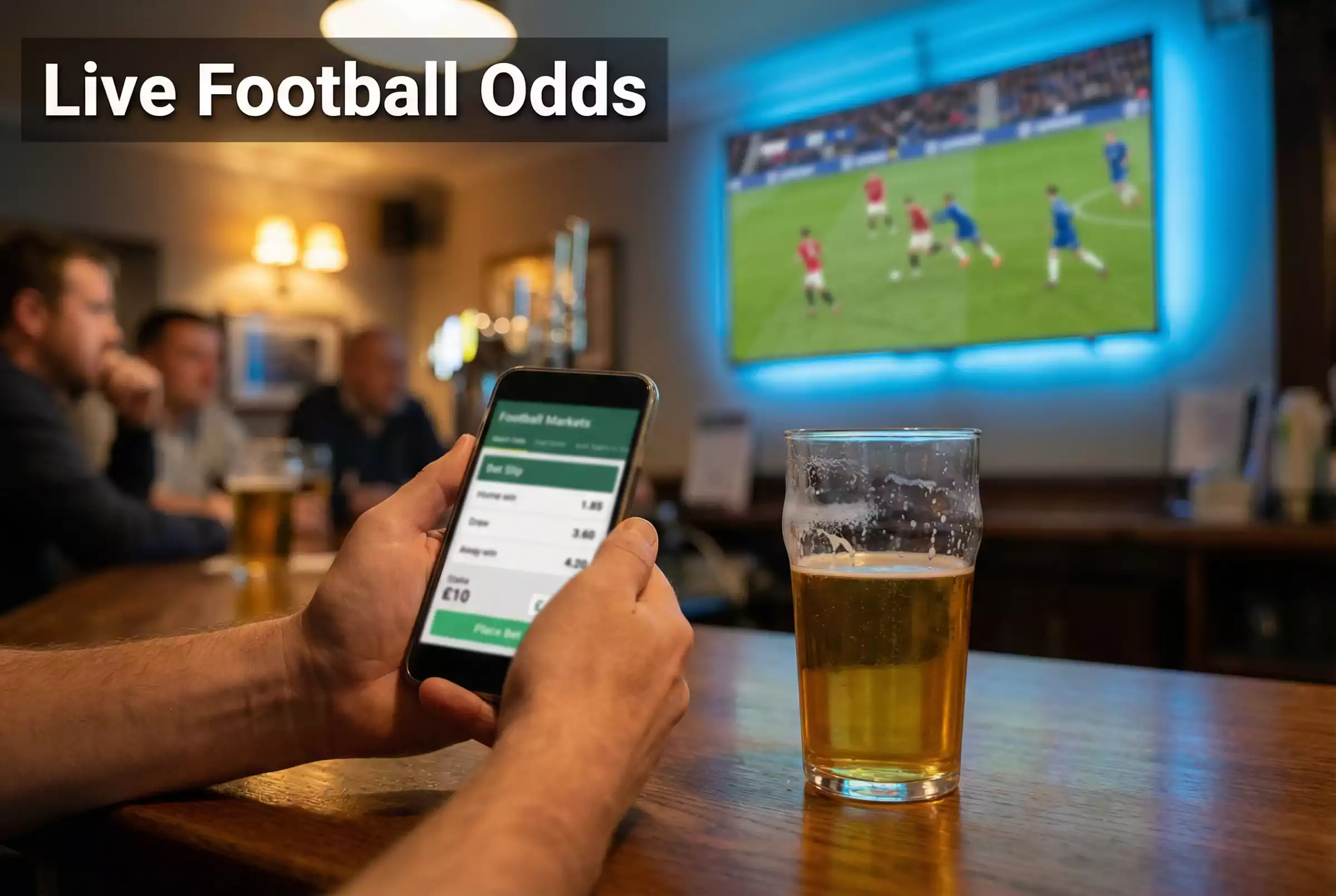
In-play odds move faster than you can click—successful live bettors prepare their positions before kickoff. The rapid odds changes that make live betting exciting also make it treacherous for impulsive punters.
The mechanics are straightforward: markets remain open during events, with odds adjusting continuously based on score changes and time elapsed. Bet acceptance may be delayed during high-volatility moments, and limits are often lower than pre-match.
Effective in-play betting rarely involves watching events and reacting. By the time you see a goal and click, odds have adjusted. Instead, successful approaches involve identifying pre-match scenarios where value might emerge during play, then standing ready to act when situations arise.
Cash-out timing becomes critical in live betting. The option to close positions lets you manage risk actively. Hedging—placing additional bets to guarantee profit regardless of outcome—becomes possible when your original position has gained value.
Risk management matters more in live betting than almost any other form. The speed and continuous nature can encourage escalating stakes during emotional moments. Pre-set session limits and strict stake discipline prevent the format's engaging nature from becoming harmful.
How to Choose the Right Gambling Site
The best gambling site isn't universal—it's the one that matches your specific priorities. A framework for decision-making helps cut through marketing noise.
Start by identifying what you actually want. Are you primarily interested in sports betting, casino games, or both? Do you value bonus size or bonus quality? Is fast withdrawal essential? Do you gamble on mobile, desktop, or both? Answering these questions honestly narrows the field.
For sports betting focus, odds quality matters most over time. An operator offering consistently competitive prices delivers better long-term value than one with flashy promotions but poor odds. For casino focus, game selection and RTP transparency become priorities—not just the number of games, but the presence of games you enjoy at RTPs you find acceptable.
Red Flags to Watch For
Warning signs include: missing or unclear licensing information, complaint patterns about delayed withdrawals, unrealistic bonus terms, slow customer support, and excessively complex terms and conditions. One red flag might be coincidence; multiple red flags indicate an operator to avoid.
Your budget matters too. High-limit players need operators accommodating larger stakes without friction. Players with modest budgets should look for low minimum deposits and penny stake availability.
Don't underestimate trying before committing heavily. Most operators let you explore platforms with small deposits. Use this opportunity to test what actually matters to you rather than relying entirely on reviews.
Common Questions About UK Gambling Sites
Let's address the questions we hear most often.
Is online gambling legal in the United Kingdom, and how do I verify a site is properly licensed?
Online gambling is fully legal in the UK for operators holding licences from the Gambling Commission. The Gambling Act 2005 established the regulatory framework, subsequently updated through various amendments and new licence conditions. To verify licensing, visit the Gambling Commission's public register and search for the operator by name. Legitimate operators display their licence number and a link to their register entry in the footer of their websites. If an operator doesn't appear on the register or their licence shows as suspended or revoked, treat that as a definitive warning to avoid them. Playing with unlicensed operators means giving up all the consumer protections that UK regulation provides.
Are gambling winnings taxed in the UK, and do I need to declare them?
Gambling winnings are not taxable for players in the UK, and you do not need to declare them to HMRC. This applies to all forms of gambling—casino games, sports betting, lottery wins, bingo, and everything else. The tax burden falls entirely on operators, who pay Remote Gaming Duty on gross gambling revenue from UK customers. This arrangement has been in place since the point of consumption tax regime began in December 2014. Professional gamblers—those who make their living primarily through betting, particularly on skill-based markets like sports betting exchanges—operate in greyer territory that may occasionally require legal advice, but for recreational gamblers, the position is clear: keep your winnings, no forms required.
What responsible gambling tools must UK-licensed sites provide, and how do I use them?
UKGC-licensed operators must provide deposit limits, loss limits, session time reminders, reality checks, cooling-off periods, and self-exclusion options. These tools are typically found in account settings under headings like "Responsible Gambling," "Safer Gambling," or "My Limits." Deposit limits let you cap deposits over chosen periods; decreases apply immediately while increases require waiting periods. Reality checks appear as pop-ups during play, showing elapsed time and session results. Self-exclusion options range from temporary cooling-off periods to permanent GamStop registration that blocks access to all UK-licensed sites. Using these tools proactively—setting limits before you need them, when thinking clearly—is more effective than relying on willpower during sessions.
Your Next Move in UK Online Gambling
The UK gambling landscape will keep evolving—but the principles of smart play remain constant. Regulatory frameworks will continue developing, new operators will enter the market, and technology will reshape how gambling experiences are delivered. What won't change is gambling's fundamental nature: entertainment that costs money over time, requiring conscious management to remain enjoyable.
The regulatory direction points toward increasing player protection. Affordability checks, stake limits, and enhanced due diligence are unlikely to relax; expect further tightening as evidence about harm accumulates. Operators adapting to this environment will build sustainable businesses; those fighting against it will find the UK market uncomfortable.
For new players, start by understanding what kind of gambling interests you. Set deposit limits before you begin. Verify operator licensing status before depositing funds. Treat your gambling budget as entertainment spending, not investment. If gambling stops being enjoyable, responsible gambling tools exist for exactly that reason.
For experienced players, periodic reassessment makes sense. The operator you chose years ago might no longer offer the best terms. Comfortable routines aren't inherently bad, but they shouldn't prevent you from evaluating whether your current approach still makes sense.
The UK market offers genuine advantages for players who engage thoughtfully: strong regulatory protection, competitive markets pressuring operators to improve, and transparency requirements helping informed decisions. Taking advantage requires effort—reading terms, comparing options, understanding odds—but the infrastructure exists for players who want to gamble intelligently within the world's most developed regulatory framework.