
What Makes Exchanges Different
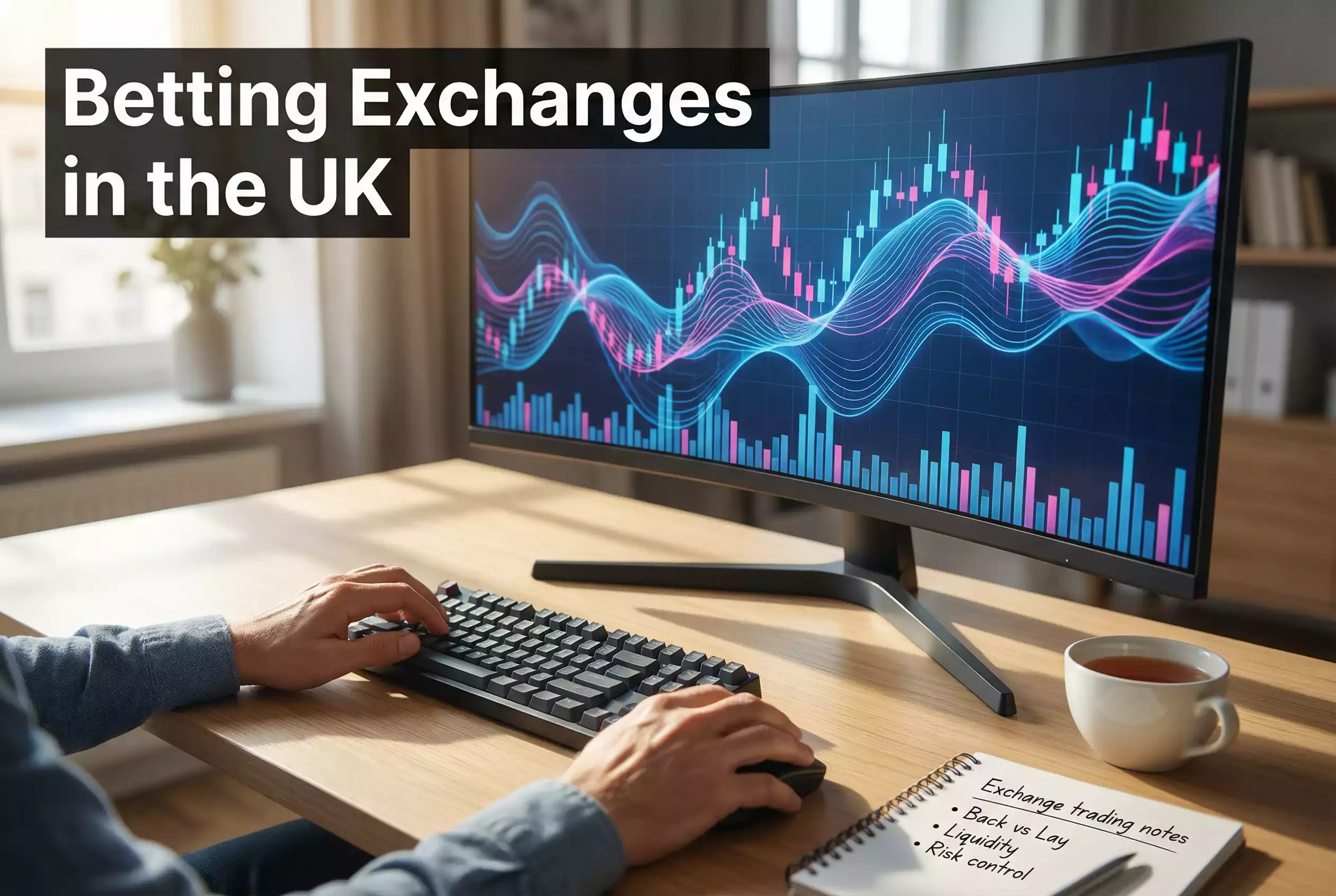
Betting exchanges operate fundamentally differently from traditional bookmakers. Instead of betting against the house, you bet against other customers. The exchange provides the platform, matches buyers with sellers, and takes a commission on winnings. This peer-to-peer model creates opportunities and dynamics unavailable at conventional bookmakers.
At a bookmaker, the operator sets odds, accepts your bet, and pays winnings from their own funds. Their profit comes from building margin into odds so that expected payouts are less than stakes received. At an exchange, other customers offer odds and accept the opposite side of your bet. The exchange profits from commission regardless of which side wins.
This structure typically produces better odds for bettors. Without bookmaker margin built into prices, exchange odds generally exceed bookmaker equivalents. The best available price on an exchange often beats the best price across traditional bookmakers for the same selection.
Exchanges also enable laying—betting against outcomes rather than for them. At bookmakers, you can only back selections to win. At exchanges, you can lay selections to lose, effectively taking the bookmaker’s side of the bet. This flexibility opens strategic possibilities that traditional betting doesn’t permit.
Liquidity determines exchange usability. Popular markets on major sports attract substantial activity, providing competitive odds and large bet acceptance. Obscure markets may have little liquidity, meaning poor odds, limited availability, or both. Exchange betting works best where many participants create deep markets.
The learning curve is steeper than traditional betting. Understanding backing, laying, liability, and market dynamics takes time. The interfaces can feel complex initially. These barriers are surmountable, but exchanges aren’t instant plug-and-play like conventional bookmaker apps.
How Laying Bets Works
Laying means betting that something won’t happen. If you lay Manchester United to win, you profit if they draw or lose. You’re taking the position bookmakers take when accepting bets on United winning—you’re offering odds rather than taking them.
The mechanics involve liability rather than simple stakes. When you back at 4.00, you stake £10 to potentially win £30 profit. When you lay at 4.00, you accept £10 from a backer and risk £30 (your liability) if they win. Your liability is stake × (odds – 1). If the selection loses, you keep the backer’s £10 stake.
This asymmetry confuses new exchange users. Backing risk is limited to your stake; laying risk equals your liability, which can substantially exceed the stakes you’re accepting. A £10 lay at 10.00 creates £90 liability—you could lose £90 if the selection wins. Managing this risk requires understanding before placing lay bets.
Laying has strategic applications beyond simple “bet against” positions. Matched betting uses lay bets to cover free bet promotions, guaranteeing profit regardless of outcome. Trading involves backing at one price and laying at another to secure profit before events resolve. These techniques require exchange access and understanding of laying mechanics.
The odds you see on exchanges have two sides. Back odds show what you can back at; lay odds show what you can lay at. Lay odds are always slightly higher than back odds—this spread represents the market’s current state. Competitive markets have narrow spreads; illiquid markets have wide spreads.
You can request odds different from those available. If current back odds are 3.00 and you want 3.20, you can request that price and wait for a layer to match. Your request enters the market; if someone accepts, the bet is matched. If no one accepts, it remains unmatched until you cancel or the market closes.
Exchange Commission Structures
Exchanges charge commission on net winnings rather than on all bets. Lose a bet and you pay no commission—only winners are charged. This structure differs fundamentally from bookmaker margin, which is built into every bet regardless of outcome.
Betfair’s standard commission rate is 5% of net market winnings. Win £100 profit, pay £5 commission, receive £95. The rate applies per market; losses in one market don’t offset commission on wins in another. However, within a single market, your position nets out before commission applies.
Loyalty programmes reduce commission rates for active users. Betfair Points accumulated through betting reduce commission in subsequent periods. High-volume bettors can achieve rates below 2%. These discounts compound the already-better odds exchanges typically offer.
Calculate effective odds by accounting for commission. A back bet at 4.00 with 5% commission delivers effective odds of 3.85 (£95 profit on £100 total return rather than £100 profit). This adjustment remains better than typical bookmaker odds but isn’t quite as good as the headline price suggests.
Commission affects trading profitability. If you back at 3.00 and lay at 2.80, the difference represents potential profit—but commission reduces it. Small edges become marginal or negative after commission. Successful exchange trading requires either larger price movements or lower commission rates.
Smarkets offers 2% commission as competitive alternative to Betfair. The lower rate makes marginal strategies more viable and improves returns on straightforward betting. However, Smarkets has less liquidity than Betfair on most markets, potentially offsetting commission savings through worse available odds.
Using Betfair Exchange
Betfair dominates UK exchange betting with the deepest liquidity and widest market coverage. Learning to navigate Betfair specifically provides skills transferable to other exchanges while accessing the most active betting markets available.
The interface displays back and lay odds side by side. Blue boxes show back odds (what you can back at); pink boxes show lay odds (what you can lay at). Numbers beneath prices indicate available money at that price. Clicking prices populates bet slips; you then enter your stake or liability.
Market depth shows queued money at various prices. If £5,000 is available to back at 3.00 and £2,000 at 2.95, you can see the market’s shape before betting. This information helps assess whether your desired stake can be matched at current prices or whether you’ll need to take worse odds.
Unmatched bets sit in the market waiting for someone to take the opposite side. Monitor your unmatched bets—they represent exposure you’ve requested but not yet obtained. Cancel unmatched bets if you change your mind; they remain active until matched, cancelled, or the market closes.
In-play betting on Betfair Exchange carries different dynamics than sportsbook in-play. Markets may suspend during key moments; prices adjust through trader activity rather than automated algorithms. The exchange in-play experience differs from sportsbook equivalents.
Betfair also operates a sportsbook offering traditional fixed-odds betting. Don’t confuse the two products—they’re different betting mechanisms with different odds and different risk profiles. Make sure you’re on the exchange rather than the sportsbook if exchange betting is your intention.
Start small when learning Betfair. Place minimum stakes while understanding the interface and mechanics. Mistakes with real money are expensive; limiting exposure during the learning phase prevents costly errors from becoming significant losses.
Exchange Alternatives
Smarkets positions itself as the lower-commission alternative to Betfair. Their 2% commission rate undercuts Betfair’s standard 5%, providing meaningful savings for winning bettors. The interface is clean and modern, perhaps more intuitive than Betfair’s more complex design.
Liquidity on Smarkets is lower than Betfair for most markets. Popular football and horse racing attract reasonable activity, but secondary markets may have limited availability. For mainstream betting, Smarkets works well; for obscure markets, Betfair’s depth matters more.
Betdaq offers another Betfair alternative with competitive commission rates. Liquidity is generally lower than both Betfair and Smarkets, limiting practical usefulness for many bettors. However, some promotions and odds occasionally make Betdaq worth checking.
Matchbook has operated as a smaller exchange with varying commission structures. Their liquidity is limited, but occasional promotional rates create value for specific purposes. Consider it supplementary rather than primary exchange.
Having accounts at multiple exchanges provides options. If Betfair odds are poor or unavailable, checking Smarkets might reveal better prices. The administrative overhead of multiple accounts is modest compared to potential benefits from accessing different liquidity pools.
Is Exchange Betting Right for You?
Exchange betting suits some bettors better than others. Assessing whether the model matches your needs and abilities helps determine where to focus your betting activity.
If you seek best available odds, exchanges typically deliver. The absence of bookmaker margin means exchange prices generally beat bookmaker equivalents on popular markets. Value-focused bettors benefit from this structural advantage.
If you want strategic flexibility, exchanges enable approaches bookmakers don’t permit. Laying, trading, and matched betting all require exchange access. These techniques aren’t for everyone, but those who use them need exchanges.
If you prefer simplicity, traditional bookmakers may suit better. Exchange interfaces are more complex; understanding backing and laying takes time; commission calculations add another layer. The simpler bookmaker experience has genuine appeal.
If you bet on obscure markets, exchanges may disappoint. Liquidity concentrates on popular events; niche sports or minor leagues may have poor or no exchange coverage. Bookmakers often provide better access to obscure betting opportunities.
Many serious bettors use both exchanges and bookmakers. Take the best odds wherever they appear—sometimes that’s an exchange, sometimes a bookmaker. Maintaining accounts across both types of operator maximises optionality without requiring exclusive commitment to either model.
Find more betting guides at onlinegamblingsitesuk. Also see our best betting sites UK.